
Many homes use compact, refrigerant-based air conditioning systems that omit ductwork and place one or more indoor air handlers in the rooms that require conditioning. These systems typically consist of an outdoor compressor/condenser and one or more indoor units connected by small refrigerant lines, electrical wiring, and a condensate drain. When configured to provide independent temperature control to different rooms or zones, the arrangement can allow occupants to set different setpoints and schedules for individual spaces, rather than relying on a single central thermostat to condition an entire dwelling.
The indoor units for these systems may be wall-mounted, ceiling-mounted, or floor-level, and each unit often includes a local thermostat or communicates with a zone controller. Controls can be simple on-unit thermostats, wired zone controllers that coordinate multiple heads, or networked interfaces that permit scheduling and remote adjustment. In some installations, the outdoor unit is matched to multiple indoor heads so each head can operate semi-independently within the limits of the system design and refrigerant circuit layout.
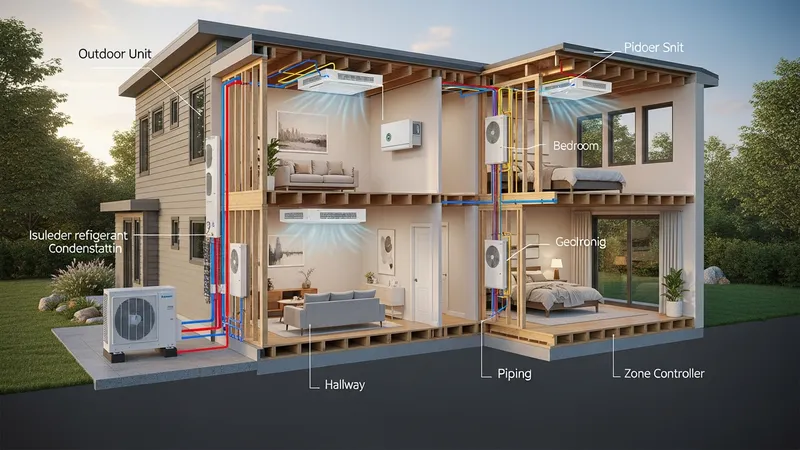
Compared with a central forced-air system that conditions all spaces through ducts, ductless systems may allow more specific allocation of cooling or heating to occupied areas. In practical terms, zoning with separate indoor units can reduce the need to condition unused rooms, though overall energy outcome depends on system sizing, occupant behavior, and climate. Noise characteristics, local installation constraints, and the capacity of the outdoor compressor to meet aggregate demand across multiple indoor heads are relevant technical factors when evaluating system suitability for a particular residence.
From a controls perspective, individual indoor units typically offer local temperature adjustment and fan speed settings; higher-level controllers can coordinate schedules and temperature setbacks across zones. Such coordination may be manual or automated through programmable controllers or networked interfaces. In some cases, occupancy sensors, timers, or smart thermostats can be added to adjust zones according to use patterns. These control choices influence comfort outcomes and how effectively the system adapts to room-by-room differences in solar gain, internal heat, and occupant preferences.
Sizing and placement of indoor heads influence both comfort distribution and efficiency. A correctly sized head may avoid short cycling and provide adequate airflow to mix room air, while an undersized unit may struggle during peak conditions. Outdoor unit capacity must consider the combined demand of all connected indoor units; long refrigerant line runs and elevation changes can also affect capacity and may require adjustments in refrigerant charge or line sizing. Electrical supply and any local code or permitting requirements are additional practical considerations in planning an installation.
Energy performance is tied to equipment characteristics and operational patterns. Many modern ductless systems use variable-speed inverter compressors that can modulate output to meet part-load conditions, which may reduce cycling losses and improve part-load efficiency relative to fixed-speed equipment. However, energy savings from zoning depend on occupant behavior, climate, and the extent to which unused zones remain unconditioned. Humidity control, air distribution, and maintenance of filters and coils also affect comfort and seasonal performance.
In summary, using refrigerant-based room units with separate indoor heads can allow more granular temperature control across living spaces and may influence comfort, energy use, and installation complexity. The next sections examine practical components and considerations in more detail.
Different indoor unit formats present distinct airflow patterns and siting options that relate directly to room use. Wall-mounted heads are commonly placed high on a wall and direct air across a room; they may be well suited to bedrooms and small living areas. Ceiling cassettes deliver air in multiple directions from a central ceiling location and can be preferable in open-plan living or rooms without suitable wall space. Floor consoles are installed near the floor and can provide useful airflow in rooms where ceiling or wall mounting is impractical. Each format can be deployed in single- or multi-head configurations depending on the outdoor unit and the zoning plan.
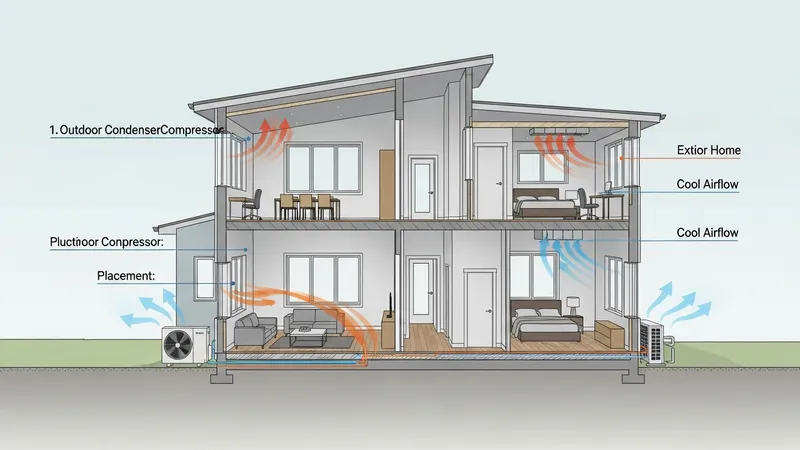
When selecting between single-zone and multi-zone layouts, a key technical issue is the outdoor unit’s capacity relative to the combined loads of all indoor heads. Multi-zone systems often allow independent temperature settings at each indoor head, but the outdoor compressor’s ability to sustain simultaneous peak output across all heads may be limited by its rated capacity and refrigerant circuit design. Installation constraints such as maximum permitted line length and height difference between outdoor and indoor units may also influence the feasible number and placement of indoor heads in a zone plan.
Indoor unit characteristics such as fan capability, throw distance, and filter access affect comfort distribution and maintenance. Units with higher throw can provide better mixing in larger rooms but may increase draft sensations if not sited carefully. Access to filters for periodic cleaning can influence indoor air quality and long-term capacity. Noise ratings often differ between models and formats; quieter units are typically specified for bedrooms or study spaces, while larger spaces may tolerate somewhat louder operation if performance requirements are met.
Control architectures include local wall controllers for each indoor head, multi-zone wired controllers, and networked solutions that interconnect units for coordinated schedules. Some homeowners use built-in infrared remote controls or smartphone apps to set individual heads, while integrated controllers can implement setback schedules across zones. Compatibility with ancillary devices such as occupancy sensors or home automation platforms varies by manufacturer and may affect how zoning strategies are implemented in practice.
Equipment efficiency ratings and operational patterns both influence running energy. Many modern ductless systems use inverter-driven compressors that modulate capacity to match load, which can improve part-load efficiency compared with fixed-capacity equipment. Efficiency is often expressed in seasonal metrics, and higher-rated units may typically offer improved performance in moderate climates. However, realized energy savings from zoning depend on behavior: if occupants frequently condition all zones to similar setpoints, the potential for reduced energy use through zoning is diminished.
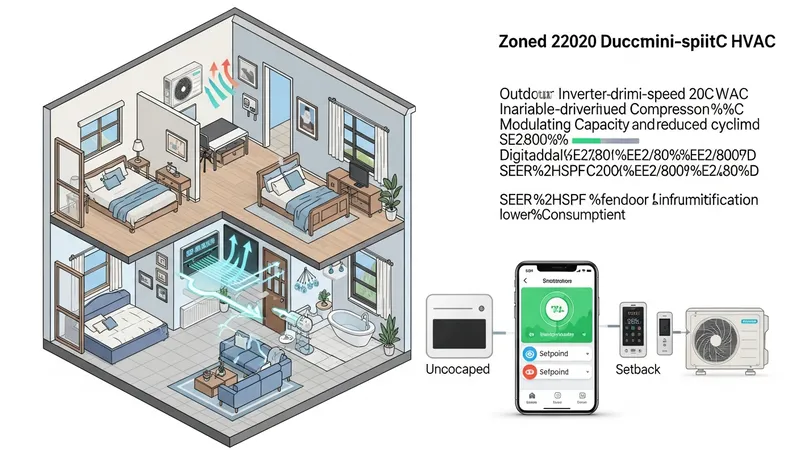
Zoning that allows unoccupied spaces to be set back may reduce total conditioned volume, potentially lowering energy consumption in homes with variable occupancy patterns. Humidity control and dehumidification efficiency are additional factors; in humid climates, maintaining comfort may require consistent dehumidification, which can affect energy use even when temperature setpoints are relaxed. Proper system design that matches capacity to room loads, includes sensible control strategies, and minimizes excessive cycling can help preserve equipment efficiency over time.
Distribution losses associated with ductwork are absent in ductless systems, which can reduce losses encountered in leaky ducts. Nevertheless, the aggregate efficiency benefit depends on application: in some cases, a well-sealed ducted system operating with a zoned control strategy could perform similarly. Seasonal climate, occupancy patterns, and local electricity pricing are practical considerations when evaluating the economic implications of different approaches. Comparative performance is best assessed with modeled or observed data specific to the home rather than general claims.
Maintenance actions such as keeping coils and filters clean, ensuring refrigerant charge is correct, and maintaining outdoor unit clearance may preserve efficiency over the system lifespan. Periodic professional inspection can identify degraded performance resulting from refrigerant leaks or component wear. Control strategies that avoid frequent on/off cycling and that permit gradual modulation via inverter technology may support more stable, efficient operation under varying load conditions.
Installation of refrigerant-based indoor heads involves mounting the indoor unit, routing refrigerant lines and condensate drains to the outdoor unit, and providing electrical connections. Typical line runs are relatively short compared with central systems, but installers must consider the maximum manufacturer-specified line length and elevation difference. Outdoor unit siting should allow airflow clearance and accessibility for service. Local building codes and permitting requirements may apply to electrical work, refrigerant handling, and equipment mounting, so planning often includes verifying applicable regulations.
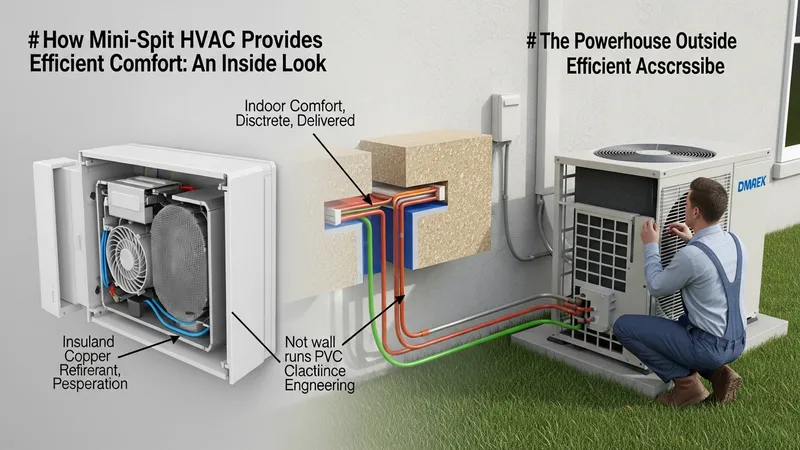
Electrical considerations include supply voltage, circuit sizing, and disconnects per local regulations. Some multi-zone outdoor units require a dedicated circuit sized for the compressor’s maximum current draw. Accessible service valves and clearances around outdoor equipment facilitate future maintenance. In retrofit settings, installers may choose indoor unit locations to limit wall penetrations or to avoid long line sets; in new construction, designers may plan specific locations that optimize airflow and minimize visual impact while meeting load requirements.
Routine maintenance tasks include cleaning or replacing filters, checking condensate drainage, and ensuring outdoor coils are free of debris. Annual or biannual professional service may include verifying refrigerant charge, inspecting electrical connections, and testing airflow and control operation. Proper maintenance can influence both comfort and operating cost over time. For homes with multiple indoor heads, coordinated maintenance scheduling can simplify upkeep and reduce the risk of neglected components causing diminished performance.
Integration options vary from simple local remotes to full networked control systems that provide scheduling, remote access, and interoperability with building automation. Some systems support smart thermostats or third-party controllers through standard interfaces, while others rely on manufacturer-provided apps. When planning zoning strategies, it can be useful to consider how the control approach will address occupancy patterns, time-of-day schedules, and occupant preferences, recognizing that automation choices may affect user experience and the realization of potential energy benefits.
Different rooms typically have distinct load profiles, and room-specific placement of indoor heads can address those differences. Bedrooms often benefit from quieter units with modest capacity to maintain stable overnight setpoints, while kitchens and living areas may require greater capacity to offset internal gains from appliances and occupants. In open-plan spaces, a single centrally placed cassette or multiple synchronized heads may provide more even conditioning than a single small wall-mounted unit. Designers often consider airflow patterns, heat gain sources, and occupant usage when allocating indoor heads across rooms.
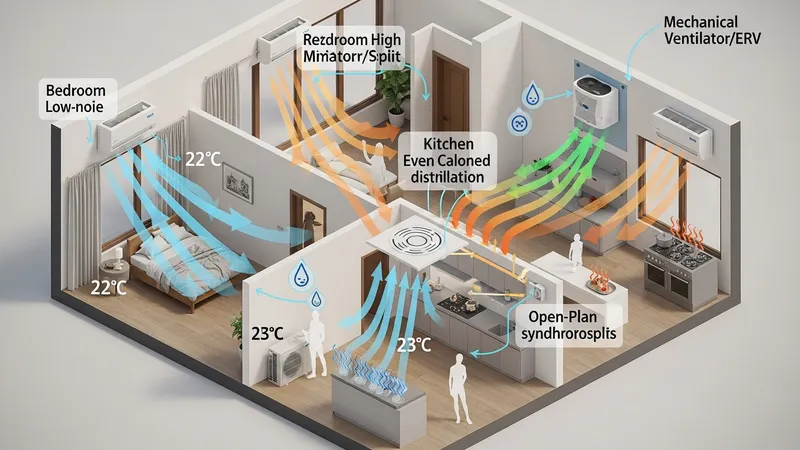
Managing humidity and ventilation remains an important facet of comfort beyond temperature control. In some climates, ductless units with effective dehumidification modes can maintain acceptable indoor moisture levels when sized and operated appropriately. Where ventilation is necessary for indoor air quality, mechanical ventilation systems or dedicated ventilators may be used in tandem with ductless cooling to ensure fresh air exchange without undermining zoned temperature control.
Noise and aesthetics can affect placement decisions and occupant acceptance. Lower fan speeds and larger heat exchangers often reduce audible noise, which may be preferred in sleeping areas. Visible indoor heads may be sited to minimize visual impact while still ensuring unobstructed airflow. Occupant training on basic operation—such as using individual unit controls and understanding scheduling options—can influence how effectively zoning aligns with daily routines and comfort expectations.
Overall performance expectations for zoned ductless arrangements depend on appropriate sizing, careful placement, and considered control strategies. When these elements are aligned with the home’s layout and occupancy patterns, occupants may experience more tailored room conditions and flexible scheduling. Continued monitoring, routine maintenance, and thoughtful control configuration can help sustain desired comfort outcomes over time.